
Setting up continuous interviewing at Mia Health

Type of work & Time
An initiative for changing how we operate in the design team and the company. Summer–Autumn 2024.

Role & Team
Initiated and drove the project. Collaborated closely with lead designer and aligned with the wider team of product, engineering, and stakeholders.

Company & Product
Mia Health is a research-based app that tracks exercise impact to stay healthy.
Problem
User interviews rarely happened because they were too hard to set up
There was no established process for interviewing B2C users. The effort involved (from finding participants to scheduling) meant they kept getting deprioritised.
Solution
A streamlined process for continuous interviewing
Templates and tooling made it easy to go from planning to gathered insights with minimal effort, so interviews could become a regular, sustainable part of the design process.
Key metrics
-75%
Less effort per interview round
From a time-consuming process to under an hour of setup.
40+
Interviews conducted per year
A regular cadence that hadn't existed before.
The process
B2C user base gave us the luxury of a large pool of potential user interviewees.
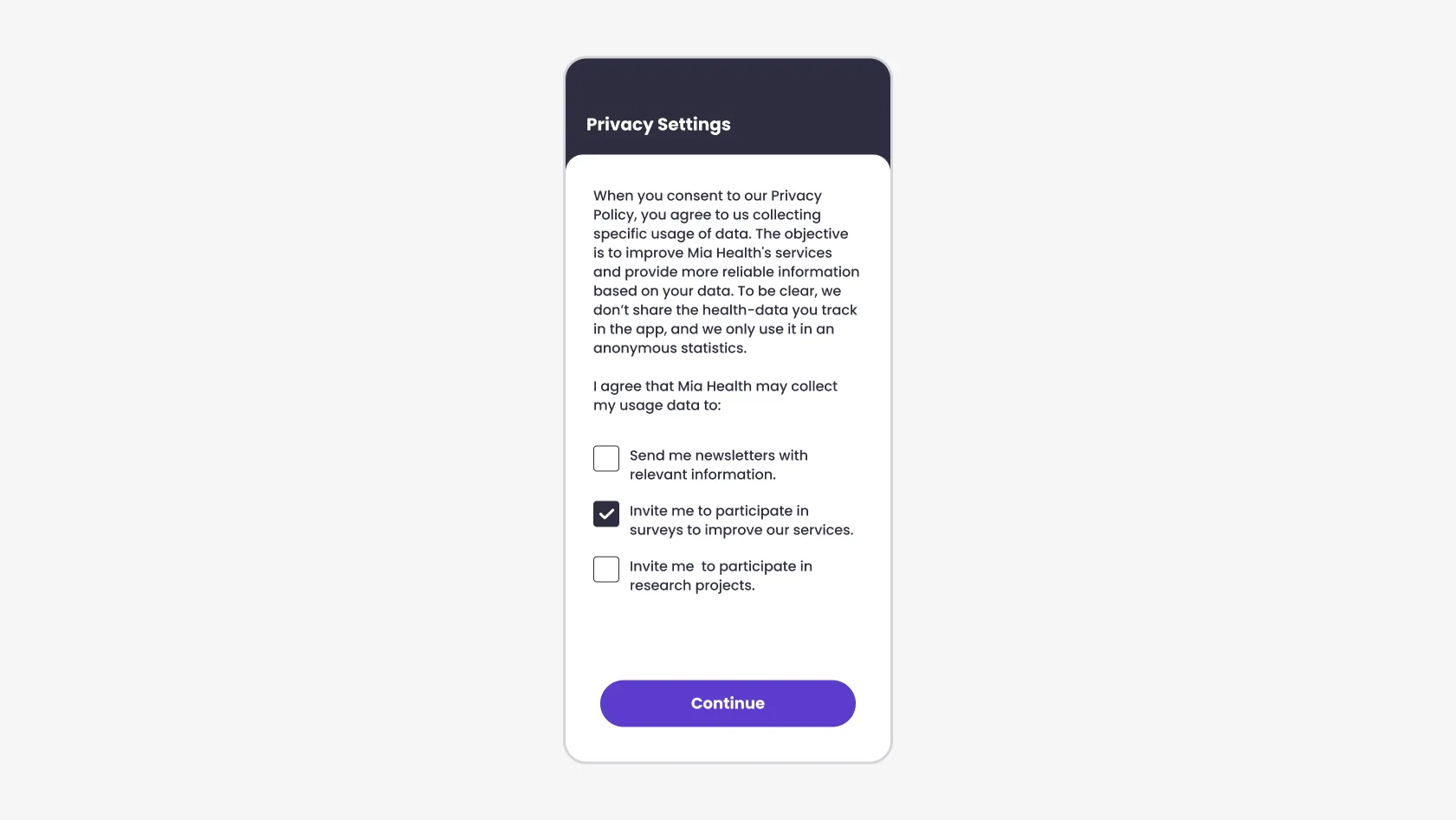
A consent form during onboarding meant users had already agreed to be contacted, giving us a direct email channel for interview invitations. Later I found out that it's optimal to contact around 100 users at a time, which yielded on average around 8 interviews.
An interview invite needed a few iterations
The first version got a poor response rate, so I kept refining the copy and format. I drew a lot of inspiration from Atlassian's research group page.
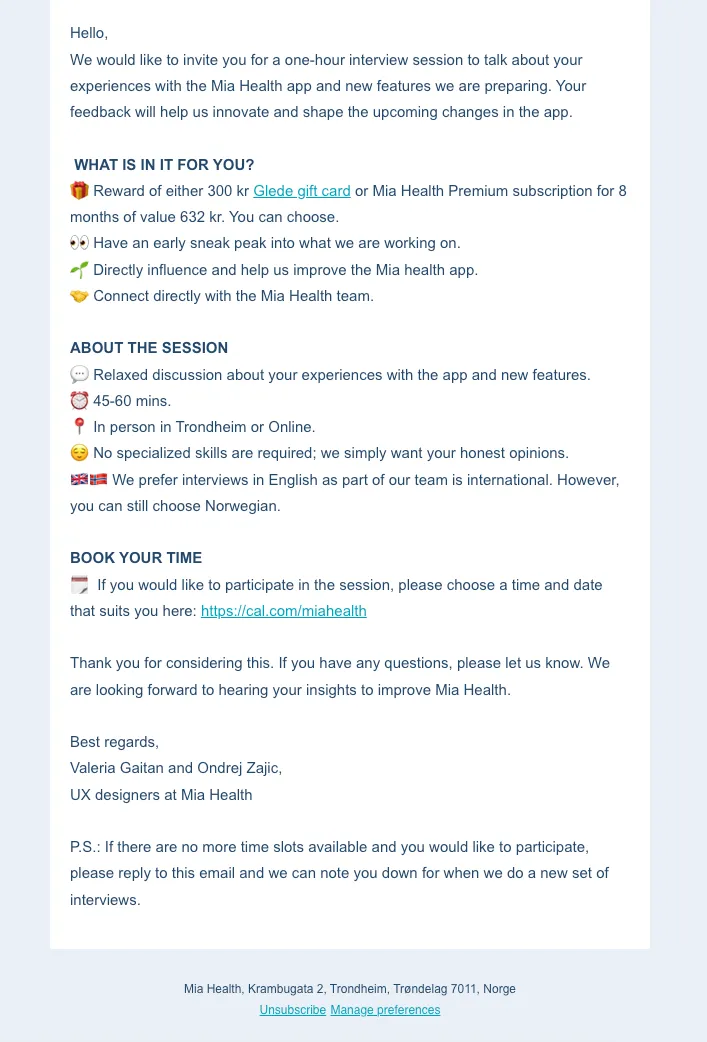
The most commonly used recruiting template
Low response rate: switching to HubSpot
I started sending out invites from Outlook but soon realised some of my emails were getting blocked when sending to 100 contacts. Even with those who received it, the response rate was initially quite low. I had no visibility into what could be wrong: whether recipients didn't find the title relevant, or opened it but didn't find it interesting. Fortunately we were already using HubSpot at Mia, so I was able to utilise the platform for sending the invites.
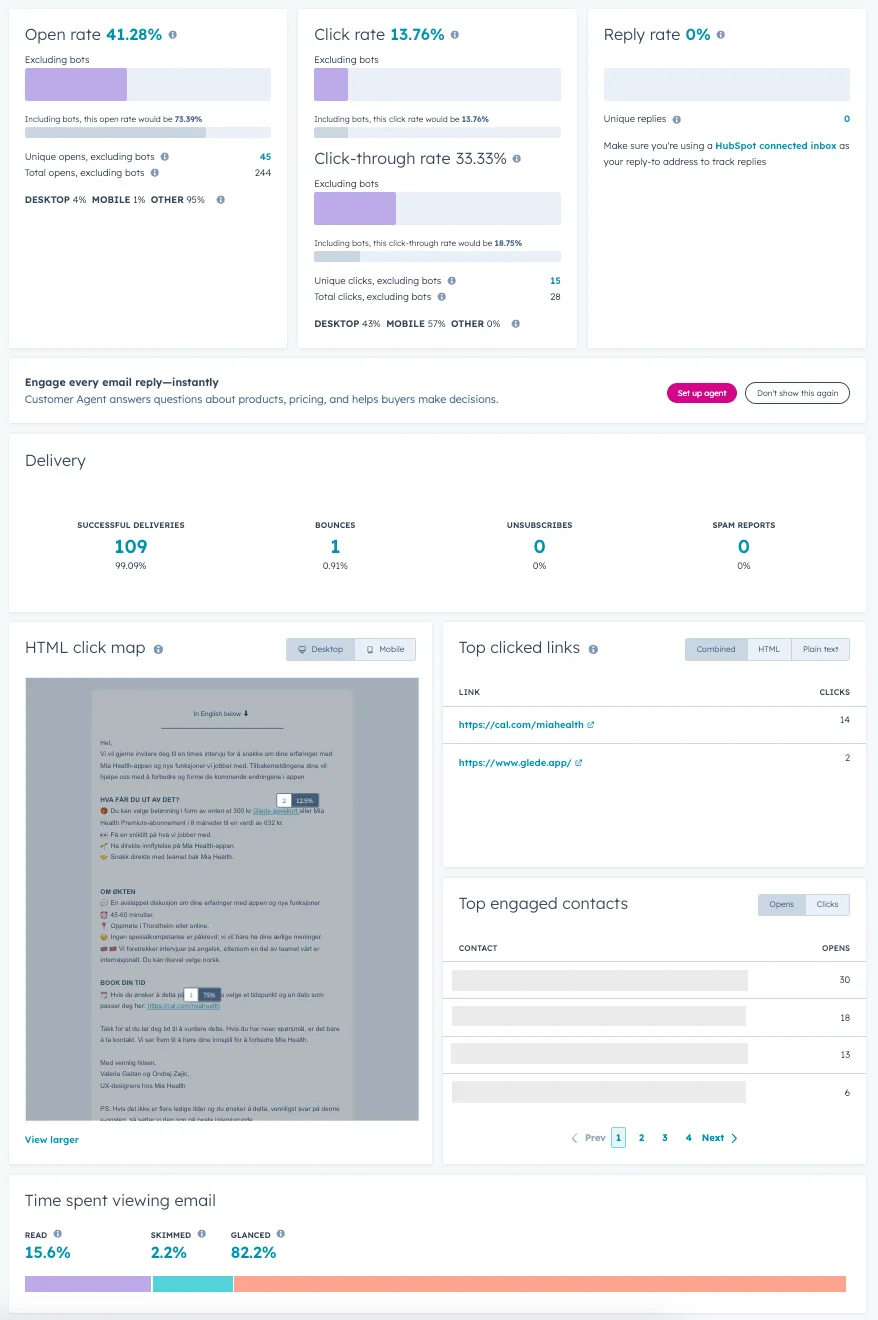
HubSpot analytics of sent email
HubSpot helped me understand how my title and contents were performing so I could iterate and see what worked best.
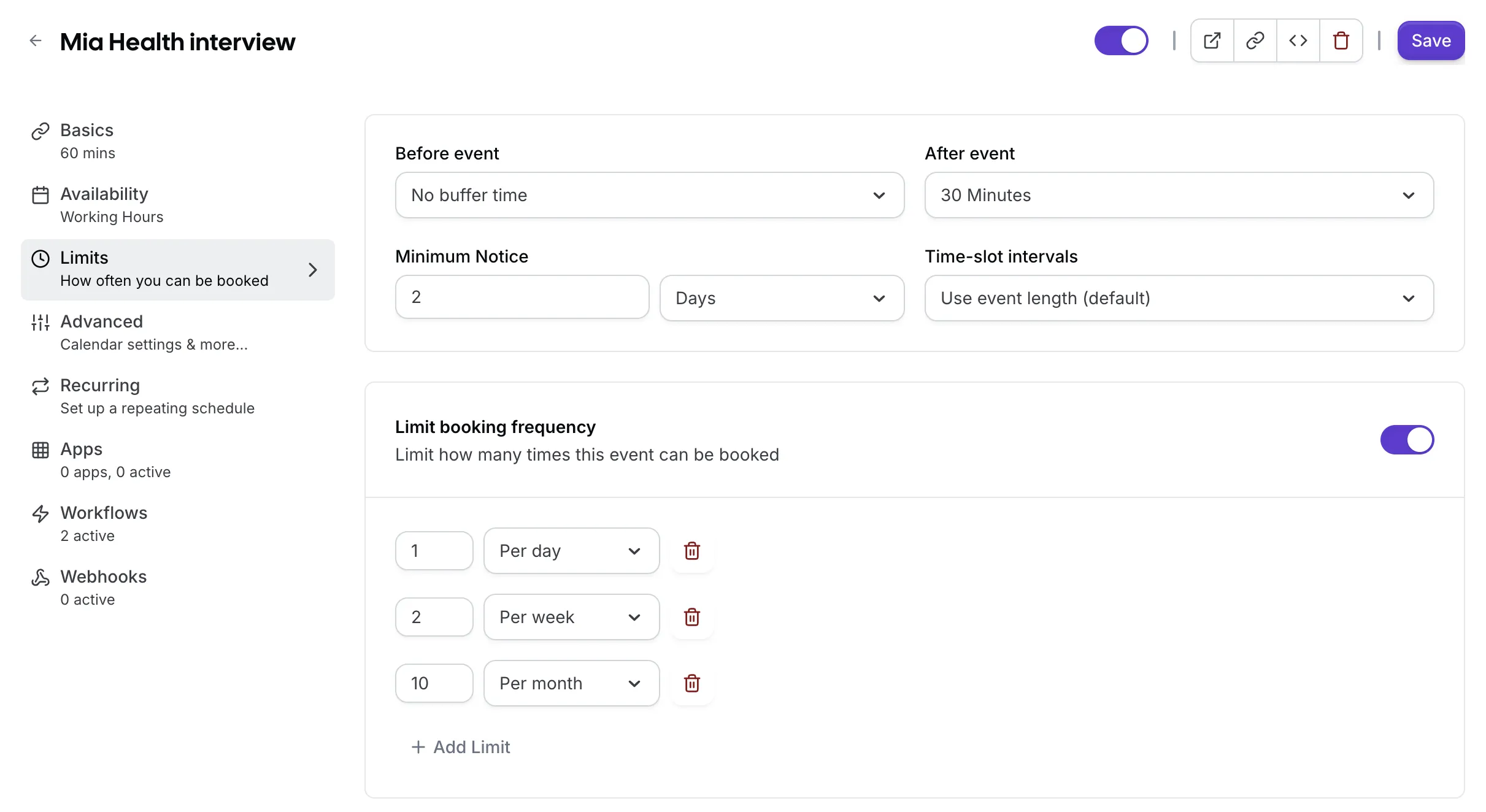
Cal.com: an easy way to schedule a fixed number of interviews per week automatically
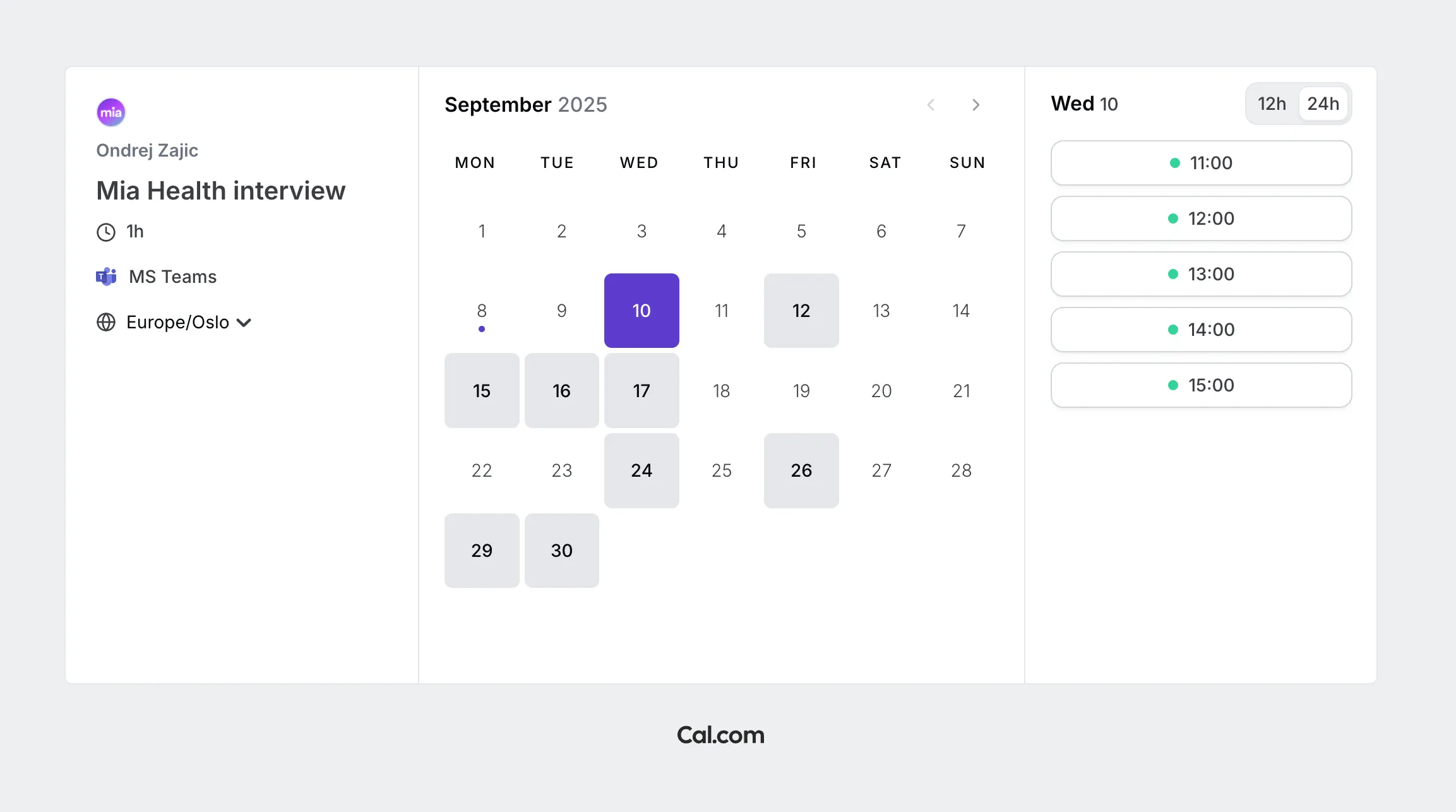
Most scheduling apps were not very customisable, which meant you couldn't plan a full month of equally spread interviews. Cal.com turned out to be exactly what we needed: it offered precisely that and saved a lot of time. If we didn't need a screening form, we got scheduled interviews in our calendar right after sending out the invitation email, without lifting a finger.
Impact
Designs validated before development. Less time wasted on the wrong things.
In our monthly release cycle, this gave us a lot more confidence that what we released wouldn't need to be redone later, because all major usability issues were already fixed. This reduced the risk of post-release rework and gave the team a stronger foundation for shipping with confidence each cycle. Regular interviews shifted us towards a truly human-centred design process: building features that are validated, relevant, and worth the development effort.
Uncovering opportunities that were not obvious
During an interview, we discovered that a freemium user didn't really understand what Premium included. In later interviews, we confirmed that most users were either unsure or misunderstood the benefits, and many avoided the free trial because it required sharing card details. This led us to introduce a "forced trial": two weeks of Premium gifted to users, no card required, so they could experience the features firsthand.
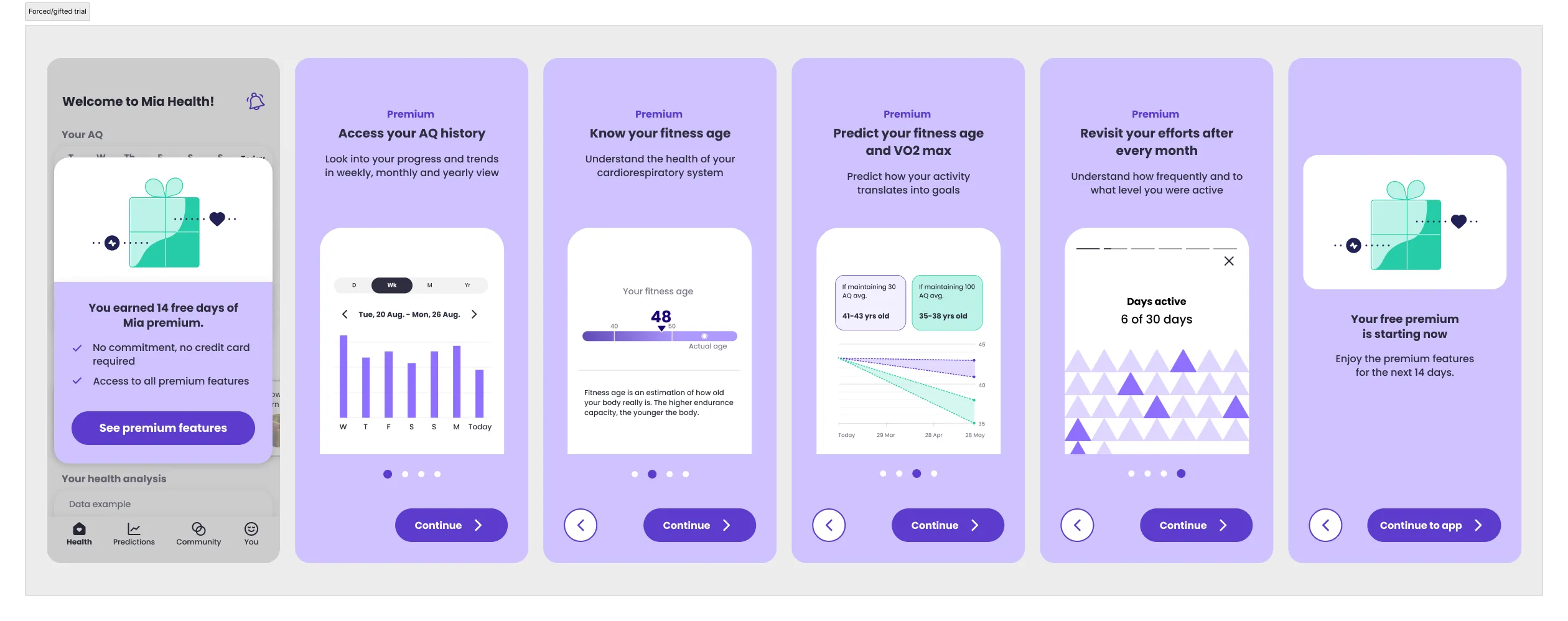
Forced trial flow to educate users and let them experience the benefits of premium.
Stakeholders better understand users through interview highlights.
My goal from the beginning was to build genuine empathy for users across the whole organisation, not just within the design team. Inviting stakeholders to sit in on interviews was my first approach, but people were too busy to attend regularly and didn't see it as a priority. I ended up presenting short interview video highlights in a weekly company meeting after every few months of interviews. The aim was to make user insights reach beyond design, so that user-centred decisions would carry more weight across product and leadership.
Low-effort recruiting enables more interviews
Two things made this sustainable:
- Easy to organise: ready-made templates and HubSpot kept the invite process fast, with Cal.com handling scheduling automatically.
- Easy to commit to: one or two interviews a week fit comfortably alongside regular day-to-day work.